 iPhoneRoot.com

News from category ‘Other’
Replacement Devices For First-Gen iPod Nano Are Now Arriving
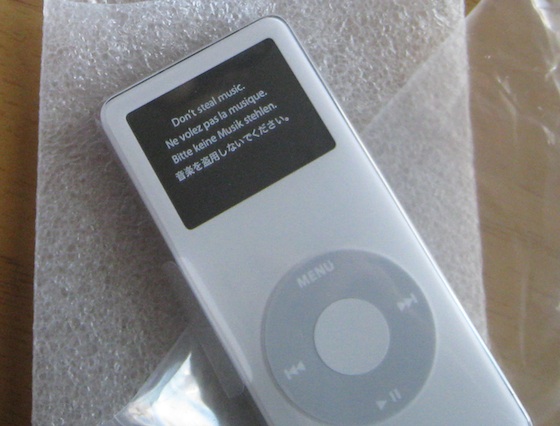
Last week Apple announced a replacement program for first-gen iPod nano. The program was initiated due to battery defects that could cause overheating of the devices. While Apple officially states that users may wait up to six week to receive the replacement devices, some customers are reporting that they have already received their replacements. And while some had expressed hopes that Apple may replace their devices with newer-generation iPod nanos given a possible shortage of devices that went out of production five years ago, customers still receives first-gen iPod nanos.
Apple Pulls Back on iPad 2 Display Orders as iPad 3 Production Begins to Ramp Up

Digitimes reports that Apple has reduced its fourth-quarter orders for iPad 2 display panels. That might mean that Apple has already started preparing for the launch of the iPad 3 early next year. The second reason might be the reduction of customers’ interest in the device. Moreover, Apple stockpiled components for an extra 4-5 million iPad 2 units, so that allows it to reduce its orders for the fourth quarter.
Sales of iPads at the end market totaled 11.12 million units in the third quarter of 2011, according to data released by Apple. However, inventories of parts and components prepared by the makers in the supply chain for the production of iPad 2 in the quarter are sufficient for the production of 15-16 million iPads, leaving a stockpile of 4-5 million units of iPad 2 in the supply chain, the sources noted.
Digitimes also notes that the reason for stockpiling of iPad 2 components may be preparation for the iPad 3 launch set for the beginning of 2012, suggesting that suppliers of both display and touch panels for the iPad 3 have either already begun or will soon begin shipments to Apple.
While Apple is adjusting panel inventory for iPad 2, Samsung and Sharp already began shipping panels for the next-generation iPads to Apple in October, and Taiwan-based touch panel makers TPK Holding and Wintek will begin to ship touch panels for the new iPads to the supply chain in November-December, the sources noted.
More than anything, kids want Apple's iPad, iPod touch & iPhone for Christmas
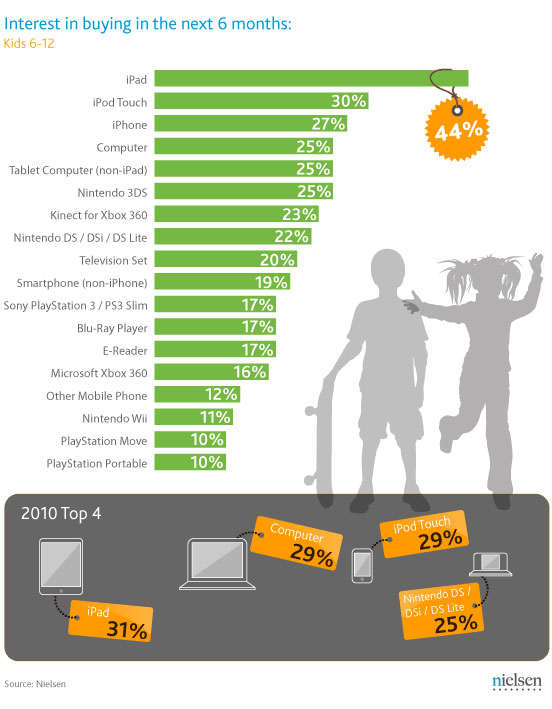
In October research company Nielsen conducted a new survey among 3,000 U.S. children at the age from 6 to 12 ahead of 2011 holiday season, and found out that the iPad is the most-wanted gift for kids, while the iPod touch ranks second and the iPhone comes in third. 44 percent of kids are interested in getting an iPad, 30 percent want an iPod touch, while 27 percent prefer to get an iPhone.
Apple's popularity among children is likely driven by gaming, as the most popular applications on iOS have consistently been games since the App Store first debuted. The iOS lineup beat out a number of popular gaming machines in the survey, including the Nintendo 3DS, Kinect for Xbox 360, and the Sony PlayStation 3.
The iPad dominates among teenagers: 24 percent of those polled said they are interested in buying an iPad in the next six months. Apple's iPhone is in the seventh place with 15 percent, while iPod touch is in twelfth with 8 percent.
Mac passes five percent global market share
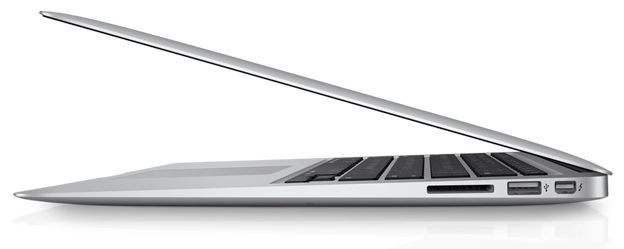
According to a new analysis, first time for 15 years Apple’s worldwide share of PC market passed 5 percent up from 4.7 percent in June and 4.4 percent a year ago. Analyst Charlie Wolf of Needham & Co. reported that in the third calendar quarter of 2011 Mac shipments outpaced the PC market for the 22nd straight quarter. Apple’s growth was 24.6 percent, while growth in total PC shipments was 5.3 percent. During this quarter Apple sold 4.89 million Macs, there are the record numbers of Mac sales.
"More impressively, the growth in Mac shipments in the past year represented 20% of the growth in worldwide PC shipments," he said. To further put things into perspective, Wolf noted that Apple's September quarter Mac shipments exceeded annual Mac shipments for all years prior to 2006.
Mac shipments significantly increased in both the home and business markets. In home market Mac shipments showed 25.6 percent growth, while the overall increase was only 4 percent. Shipments to the business market were an impressive nine times the market pace: 43.8 percent versus 4.8 percent. Wolf suggested that Mac success could be attributed to halo effect from the iPad and iPhone.
However, Apple didn’t show great performance in the education and government markets. In the third calendar quarter of 2011 Mac shipments to education customers for the quarter grew on 2.9 percent, compared to 16.9 percent for the PC market. Such situation might be caused by the iPad cannibalization of the education market.
Samsung modifies, rebrands and relaunches Galaxy Tab 10.1 in Germany
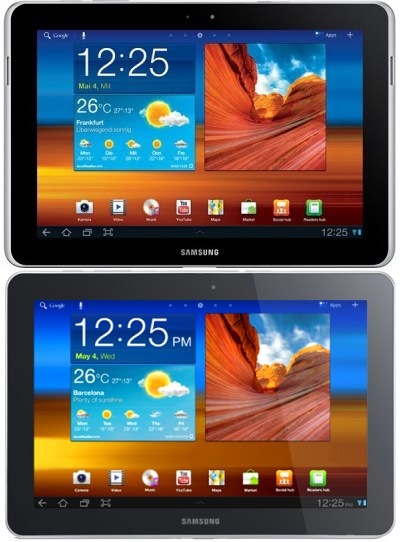
New Galaxy Tab 10.1N (top) vs. Galaxy Tab 10.1 (bottom)
Samsung tries to bypass patent infringement from Apple, modifying the design of its Galaxy Tab 10.1 touchscreen tablet in order to re-launch it in Germany. Moreover, Samsung decided to rename the device. The new product is known as the Galaxy Tab 10.1N. The most obvious difference from the front of the device is that the metal frame around the edges of the device now wraps around slightly toward the front along two of the edges. We are not sure that such device will definitely steer clear of infringement. Anyway, it’s up for the Court to decide.
"But without a doubt, Samsung has upped the ante fro Apple and its lawyers in case they wish to request a new injunction or allege that this constitutes an infringement of the existing one."
Germany seems to be a really important battleground in the fight between Samsung and Apple. Last week, Samsung filed a new complaint against Apple in the country. And it’s obvious that the company decided to redesign its device because of permanent ban from selling the Galaxy Tab 10.1 in Germany.
 Leave a comment, read comments [2]
Sony Seeking To Bypass Cable Providers With Web-Based TV Service

Last week it was reported that Sony was actively working on changing the way users view and interact with content on its TV sets, with company’s CEO Howard Stringer acknowledging that they was seeking the way to compete with Apple’s ecosystem that is planned to include TV sets in the near future.
Enterprise adopting Apple products as company becomes 'easier to work with'
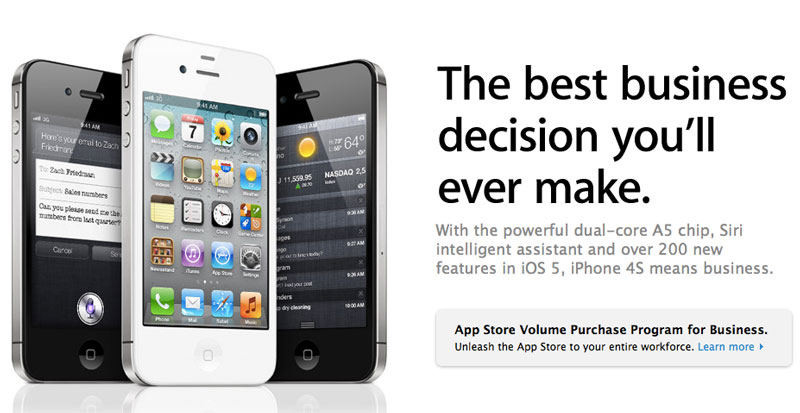
The New York Times published an article by Nick Wingfield where Apple’s growth in enterprise sector of the market was revealed, noting that the current Apple’s CEO Tim Cook is "more at ease" meeting with enterprise customers, while Jobs disliked working with businesses.
"While corporate technology buyers say Apple does not try to hide the fact that consumers are still its top priority, they note that the company has gotten easier to work with in recent years, adding features to its devices that make them more palatable to business," author Nick Wingfield wrote.
Under Jobs guidance corporate customers were often rubbed the wrong way. Tim Cook, even before being appointed Apple’s CEO, was said to engage in more communication with the company's enterprise clients.
"(Cook) met more frequently with corporate customers and seemed to appreciate their needs, even if he did not deviate from Mr. Jobs's views about making consumers the priority when making Apple products," the report said.
Apple's new success in the enterprise belongs largely to the iPhone and iPad. According to the recent reports, 93 percent of Fortune 500 companies are deploying or testing the iPhone, while 90 percent are deploying or testing the iPad. Macs also have found its place in enterprises. Moreover, as it was found out, Mac business users are more productive than their PC counterparts.
Apple, Chinese environmental groups meet to discuss supplier pollution concerns

On Tuesday Apple held a meeting with five Chinese environmental protection groups in Beijing. While a three-and-a-half hour meeting Apple and representatives from Chinese companies were discussing domestic supplier pollution and reports, criticizing the company for using loopholes in the system.
The representative of EnviroFriends, Li Li, who took part in the meeting, claimed that the company continues to put the burden of responsibility for pollution on its suppliers. But Apple refuses to reveal its suppliers, thus, the groups decided to carry out their own research to discover suppliers working with Apple. During the meeting Apple admitted that 15 out of the 27 suppliers accused of excessive pollution were suppliers for the company.
"Apple said they had already spoken to 11 supply firms and asked them to reform, and they’re in the process of initiating communications with the other four," Li said.
"Apple is committed to driving the highest standards of social responsibility throughout our supply chain. We require that our suppliers provide safe working conditions, treat workers with dignity and respect, and use environmentally responsible manufacturing processes wherever Apple products are made," said spokeswoman Carolyn Wu.
Remind you that this year Greenpeace ranked Apple as the fourth-greenest device maker, up five spots from last year.
Apple rumored to issue iOS 5.0.2 for battery woes, iOS 5.1 with Siri additions
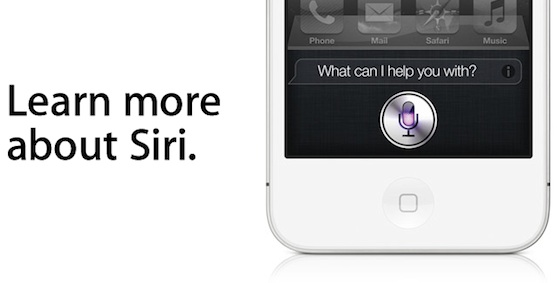
German site Macerkopf reports that Apple is working on two software updates for iOS 5 to fix battery issues and to add new features to Apple’s voice recognition assistant Siri. Macerkopf tells us:
iOS 5.0.2 coming very soon, solving the battery bugs. Should arrive before the end of next week. Apple is working hard on the update. In addition Apple is working on the first big iOS 5 Update (iOS 5.1), bringing some Siri-extensions. Also the Siri hardware-control is in work "take a picture", "make a video", "switch on/off WiFi", "switch on/off BT" and more.
The new update will be iOS 5.0.2 and is expected to be released next week to address continued battery life issues even after last week's release of iOS 5.0.1 that was also targeted at solving battery issues. But there are still no signs of developer testing for an iOS 5.0.2. The other update Apple is working on to improve Siri functionality on the iPhone 4S will be probably dubbed iOS 5.1. The update seems to be released earlier next year. Apple may add new languages and expansion of maps and local search to new countries in the update.
Dividend seen bringing $4B in additional investments to Apple
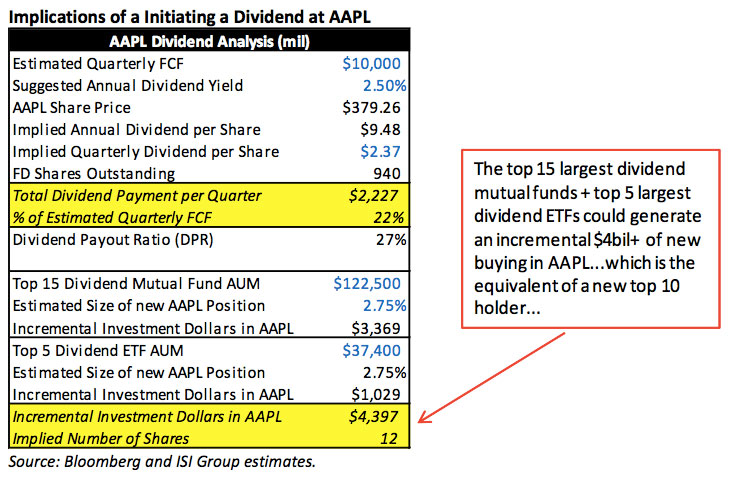
Analyst Brian Marshall with International Strategy & Investment Group claims that apple may finally pay its shareholders dividends, despite the company’s long resistance. Most investors do not believe Apple will initiate a dividend policy in 2012, but if the company will, it may gain an additional $4 billion in investments.
At the moment the current Apple’s CEO Tim Cook is reorganizing the company, so he may probably make an effort to optimize capital structure and start paying dividends Apple’s shareholders. Brian Marshall believes that Apple could "easily" implement a dividend yield of 250 base points, amounting to about $2.40 per quarter.
Apple’s previous CEO, Steve Jobs, didn’t support the idea of dividend distribution and preferred to invest in strategic opportunities such as last year purchase of Siri (Apple paid about $200 million).
"We strongly believe one or more strategic opportunities will come along we're in a unique position to take advantage of," the late Apple CEO said in 2010. "We don't let the cash burn a hole in the pocket or make stupid acquisitions. We'd like to continue to keep our powder dry because we think there are one or more strategic opportunities in the future."
Samsung's Patent Cases Against Apple to Ramp Up in 2012
Bloomberg reports that Samsung has won an early trial date of March 2012 for its case against Apple in Australia. Noteworthy, the judge accepted that proposal over Apple's opposition that requested a trial date of August 2012.
Australia Federal Court Justice Annabelle Bennett today ordered that a trial on Samsung’s claims be held in March. Cupertino, California-based Apple had opposed an early trial, with its lawyer Stephen Burley saying the company needed more time to prepare the case and favored a hearing in August.
Samsung, the world’s biggest maker of smartphones last quarter, dropped its bid for a temporary injunction barring Apple from selling the iPhones and iPad 2 and instead is seeking an early hearing. The Australian trial will be a prelude for Samsung in its U.S. case before the International Trade Commission on similar claims, which Burley said will be heard in May and June.
With the trial set for March 2012 Samsung may also add to its case against Apple new devices such as iPad 3 that is rumored to be released early 2012. The case is currently targeting the iPhone 4, iPad 2, and iPhone 3GS in Australia.
Android Tops 50% Share of Smartphone Sales, But Apple Still Dominating Profits
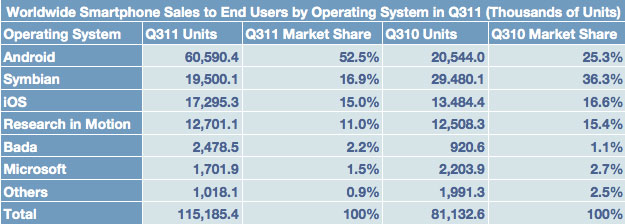
According to the results of worldwide mobile phone sales for the third quarter of 2011, released yesterday by the research firm Gartner, Apple's share of the total mobile phone market came in at 3.9% for the quarter, down from 4.6% in the previous quarter. However, Apple still takes fourth place behind Nokia, Samsung, and LG.
Apple shipped 17 million iPhones, an annual increase of 21 percent, but down nearly 3 million units from the second quarter of 2011 because of Apple's new device announcement in October. Gartner believes Apple will bounce back in the fourth quarter because of its strongest ever preorders for the iPhone 4S in the first weekend after its announcement. Markets such as Brazil, Mexico, Russia and China are becoming more important to Apple, representing 16 percent of overall sales and showing that the iPhone has a place in emerging markets, especially now that the 3GS and 4 have received price cuts.
iOS share slipped from an 18.2% in the second quarter to 15.0% in the third quarter. Android and Nokia with its soon-to-be-defunct Symbian platform are now leaders of the market. During the quarter, Android’s share increased by 52.5%, more than doubling year-over-year.
But Android dominates the worldwide smartphone market by units while Apple by profit. Some researches show that Apple now takes more than a half of the industry's profits.
Developers crack Siri’s security protocol to enable it with any device

A team of developers called Applidium has announced that they managed to investigate how Siri, exclusive service available on the iPhone 4S, talks to Apple servers. Applidium notes that iPhone 4S uses standard HTTPS network requests to communicate with Apple's servers, but sends data using an "ACE" command rather than regular web GET requests. Moreover, each Siri request involves a unique identifier based on UUID. Such identifier prevents access of unauthorized devices to Apple’s servers. User’s requests are compressed with the Speex audio codec optimized for VoIP. Applidium discovered that iPhone, to provide Siri’s voice recognition, should support at least Siri's basic voice recognition features, but Apple doesn’t plan to port such capabilities on earlier iOS 5 models.
So far, Applidium's investigation has revealed that Siri packages requests in compressed property lists, but further exploration of the protocol is hampered by a number of issues, including the complexity of requests, the fact that they are tied to a hardware key, and that they are subject to change.
Noteworthy, Apple could at any time stop supporting a particular hardware identifier, if it is suspected of being used to exploit its servers, and change way of data transmitting.
Applidium says "anyone could now write an Android app that uses the real Siri! Or use Siri on an iPad!" But you will need a real unique user key of an actual iPhone 4S.
Foursquare Offers New iPad Experience In Its Web App
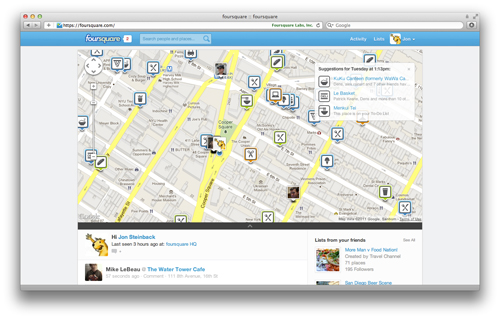
Following the moves of Financial Times, Fortune and other companies taking advantages of using modern web technologies, a location based social network FourSquare is also focusing on using HTML5. For majority of the social apps found in the App Store, an elaborate HTML5 web app can work just as well as native apps.
Apple to revamp the Genius Bar with iPads, drop the Macs

Typically geniuses staying behind Genius bars use MacBook Pros to provide customers with help and support, facilitate repairs, look up customer information, and order new parts. But last week some Apple retail stores replaced MacBook Pros with iPads that can mirror functionality of the laptops.
These iPads will obviously make the Genius’ job easier and provide a much better experience for Apple’s customers that are looking for repairs and/or help from the Genius Bar. At least one reason for the iPad is that Apple’s tablet is portable so that geniuses can help customers anywhere in a store. So use of the iPads may transform Genius bar from a place in a store where you may receive quality help to the service that you can get anywhere in a store.
Using MacBook Pros, Apple has been limited to fitting only a few the computers at Genius Bars. The iPad allows Apple to serve more people at one time at Genius bar. Moreover, Apple has already developed a system called MobileGenius, which runs on iOS devices and provides the same services as MacBook Pros.